Free · no sign-up
Midface Ratio Calculator: Long, Balanced or Compact?
Upload a front-facing photo or type two measurements, and this free midface ratio calculator divides your pupil distance by your midface height, the drop from the pupil line to the upper lip. See your ratio, a long, balanced or short reading and the lines drawn on your own face.
- Photo or typed numbers
- Head lean corrected
- Photo stays on your device
- Results in seconds
Drop a front-facing photo
JPG, PNG, WebP or HEIC up to 30 MB. One face, straight on, even light.
Runs in your browser. The photo is not uploaded.
How it works
How to Calculate Midface Ratio
Wondering how to measure midface proportions? It comes down to one division: pupil distance over midface height. A ruler and a mirror can do it, but the midface ratio calculator takes both distances from one photo, or from two numbers you type.
Add a Photo or Two Numbers
Drop in a selfie or use your camera. JPG, PNG, WebP and HEIC all work, and a quality check asks for another photo when needed. No photo? Type both distances.
Both Distances Measured
A face model places 478 facial landmarks in your browser. The calculator finds both iris centres and the top of your upper lip, then reads the height along your face's own vertical axis.
Divide and Read the Result
Pupil distance ÷ midface height gives your ratio and a long, balanced or short label. Tap a reading and its line appears on your photo, with your midface share and eye spacing beside it.
What it measures
What the Midface Ratio Calculator Measures
Two distances make the ratio, and the same photo adds two more readings of the middle of your face. Each one comes from points you can see on your photo, so you can check it yourself.
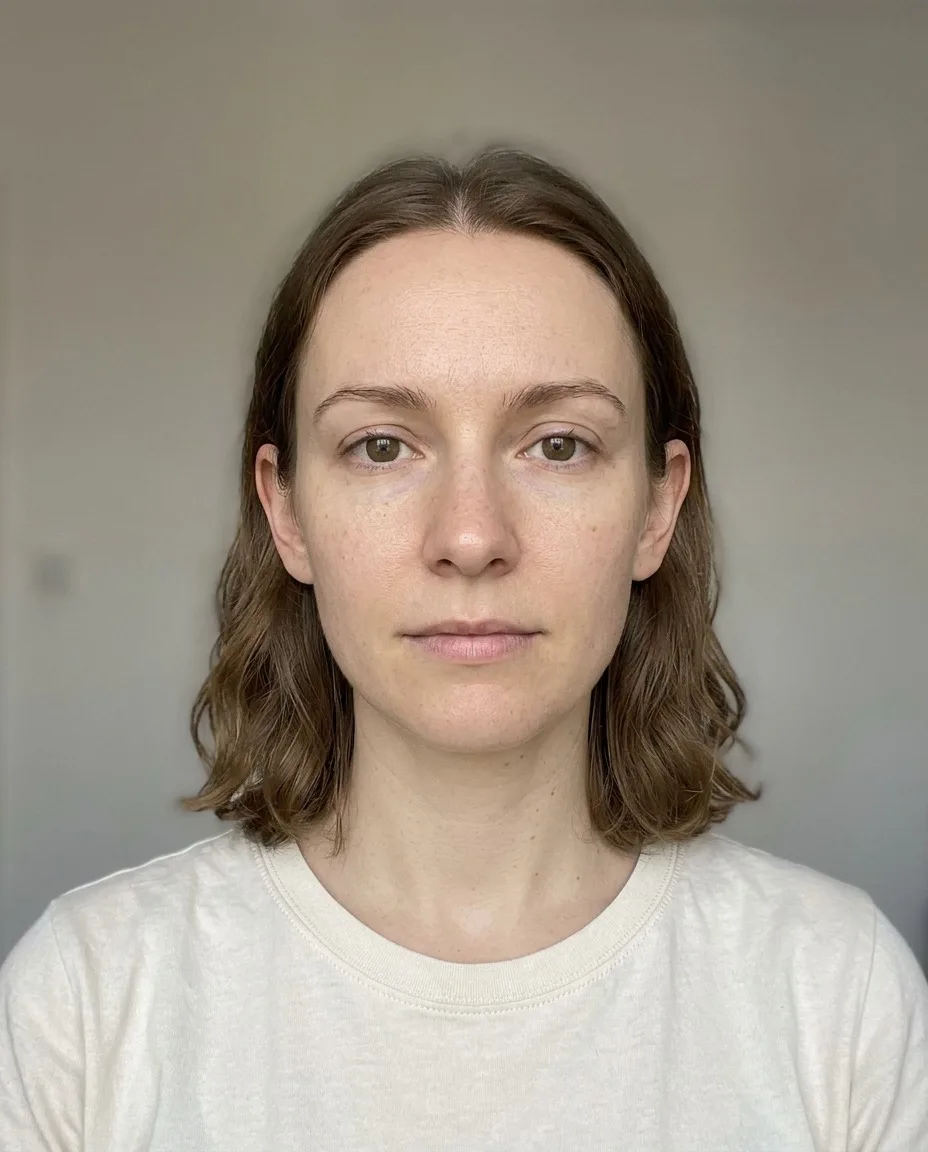
Pupil Distance
The width in the ratio: your interpupillary distance, from the centre of one iris to the centre of the other. Looking straight at the lens keeps both centres in place.
Midface Height
The midface length in the ratio: from the line through your pupils straight down to the top of the upper lip. It runs past the nose and the philtrum, so keep your lips closed.
Your Midface Ratio
Pupil distance ÷ midface height, to two decimal places. A lower number means a taller midface and a higher one a more compact midface. At 1.00, the two distances are equal.
Your Face's Own Vertical
Height is read along an axis fitted to your face, not the edge of the photo. Lean your head to one side and the reading stays the same.
Midface Share and Eye Spacing
Brow line to nose base as a share of the face, and the gap between your eyes ÷ one eye width. Both open beside your ratio, each against its own reference band.
Typed Measurements
No photo? Type pupil distance and midface height in any unit, as long as both match. The sample portrait shows where each line runs, and the same bands apply.
What your result means
Long vs Short Midface: What Each Result Means
Your midface ratio falls into one of three bands. The cut-offs are this tool's own convention, not a clinical norm, and other sites draw them elsewhere. Even the balanced band is a reference, not a goal.
< 0.90
Long Midface
Midface height clearly exceeds pupil distance, so the middle of the face reads tall next to the eyes. A lowered chin or a camera above eye level can push a reading into this band.
0.90–1.05
Balanced Midface
Pupil distance and midface height are close to equal. Near either edge of the band, a small change in camera height or expression can tip a reading over.
> 1.05
Short or Compact Midface
Pupil distance clearly exceeds midface height, which is why a short midface is also called a compact midface. A raised chin or a camera below eye level can push a reading into this band.
Why does a lower number mean longer? Height sits under the line of the fraction, so a taller midface makes the result smaller. Some sites divide the other way round, and there a long midface gets the higher number.
Accuracy and limits
How Accurate Is a Midface Ratio Test?
A midface ratio calculator is accurate at one job: dividing two distances in your photo the same way every time. Your chin angle moves the result more than most people expect, and the bands are only a convention.
Same Photo, Same Ratio
What it measures well
Run one photo twice and the ratio does not move. It is plain geometry, with no language model offering an opinion.
What it can't tell you
A single true number for your face. Two careful photos can differ by a few hundredths, which matters most close to 0.90 or 1.05.
Head Lean and Chin Angle
What it measures well
A head leaning to one side is corrected, because height is read along your face's own axis and not the edge of the photo.
What it can't tell you
A raised or lowered chin is not. Your upper lip sits in front of your eyes, so a raised chin shortens the midface in the picture and a lowered one lengthens it.
Three Points on Your Face
What it measures well
Both iris centres and the top of the upper lip, located from 478 landmarks on your own device.
What it can't tell you
The bone underneath. A smile or lip liner can move the lip point, a moustache can hide it, and half-closed eyes or glasses can blur the iris centres.
What the Number Means
What it measures well
A plain fact about your facial proportions in one photo: how pupil distance compares with midface height.
What it can't tell you
Whether your face is attractive, or anything medical. Taste varies between people and cultures, and this midface ratio calculator is not a clinical exam.
Chin angle and camera height move this reading the most, so keep your head level and shoot at eye level before you compare two results.
Photo tips
Photo Tips for an Accurate Midface Ratio
The calculator measures the photo, so the photo decides the number. Six habits keep your head level, your lips in place and two results fair to compare.
Camera at Eye Level
Hold the phone level with your eyes, an arm and a half away. Held higher, your midface reads longer. Held lower, it reads shorter.
Chin Level, Face Square
Look straight into the lens with your nose centred and both ears equally visible. A raised or lowered chin is the quickest way to change the reading.
Soft Light From the Front
Face a window. Overhead light shades your eyes and your lip line, and those are the points this reading depends on.
Lips Closed and Relaxed
A smile lifts the upper lip and shortens the midface in the picture. Keep your lips gently closed and your face neutral, with no pout.
Glasses Off, Hair Back
Lenses can shift the look of your pupils and frames can hide them. Take your glasses off and keep hair clear of your eyes.
Sharp, With No Filters
Rest the phone or use a timer so the irises and lip line stay crisp. Turn off beauty mode, which can reshape a face before it is measured.

Changing the look
How to Shorten Midface Proportions With Styling
People search for how to shorten midface length or how to get compact midface proportions, but a long midface is not a flaw to fix. Bone sets the ratio, and no exercise is known to change it. Styling changes how it reads, in either direction.
Start With the Photo
A lowered chin or a high camera is enough to push a reading long. Retake the picture at eye level before you decide what your midface is.
Hair That Balances
Volume at the sides and a lower parting make a long midface read shorter. Height on top and a higher parting lengthen a compact one.
Brows and Blush
Fuller brows and blush swept across the cheeks draw the eye sideways, which shortens the look. Open brows and blush lifted toward the temples lengthen it.
Frames With Presence
A bold frame with a low bridge breaks up a tall midface. Light or rimless frames keep a compact midface open.
Let Your Expression Help
A relaxed smile lifts the upper lip and the cheeks, so the midface reads shorter. In everyday pictures, that helps more than a neutral face.
Retest the Same Way
Use the same spot, light and distance each time, so a change reflects you and not the camera. Anything involving bone is a medical decision for a qualified surgeon.
Your privacy
Your Photo and Numbers Stay on Your Device
This midface ratio calculator works inside your browser. Your photo and any numbers you type are handled on your own phone or computer, so nothing is uploaded, stored or used to train a model.
Measured on Your Device
The face model downloads to your browser and runs there. Your photo stays on your phone or computer from start to finish.
No Sign-Up
The free tool asks for no account, email or payment. Close the tab and the photo is gone.
Never Used for Training
A photo that is never uploaded cannot be kept or used to train a model, and that holds for every free FaceStats tool.
Uploaded Only for the Full Report
The optional full report uses AI processing in the cloud. Your photo is uploaded only after you choose to buy it and agree, and you can delete it afterwards.
Full Report for Adults
The paid report is for people aged 18 and over using a photo of themselves. The free calculator asks for no personal details.
Typed Numbers Stay Local
Typed measurements are divided in your browser. They are not sent anywhere, and they disappear when you leave the page.
Common questions
Midface Ratio Calculator FAQ
Short answers on what the ratio is, how to read your number and what it can and cannot say about your face.
More tools
More Free Face Tools
Each one looks closely at one part of your face, such as its shape, its symmetry or your eye angle, free and in your browser.
Measure Your Midface Ratio in Seconds
Upload one photo and the midface ratio calculator shows your ratio, its label and the lines on your own face. Free and private, with no sign-up.